


Latest news

Optro, formerly AuditBoard, expanded its Optro Partner Connect program to include tracks for independent software vendors and large-scale aggregators, the company announced last week. The program now offers co-investment in partner-led marketing, enablement, and practice-building, with eligible partners able to submit funding proposals. Optro also added API tools, sandbox access, and dedicated support for co-developing integrated workflows, and distributors can add its GRC software to catalogs using existing billing infrastructure. The expansion follows a September distribution deal with Carahsoft and a partnership with TD Synnex. Optro plans to launch annual Partner Connect Awards next year.
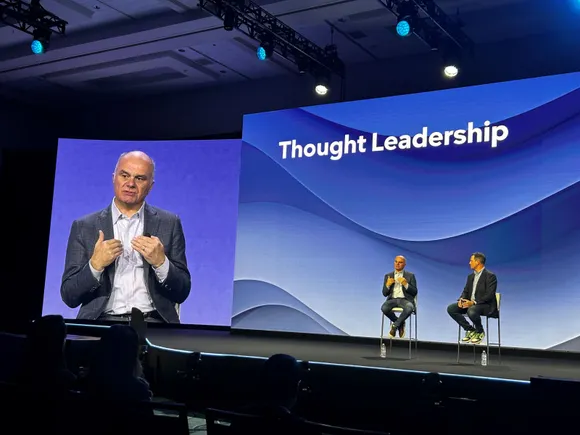
Michael Israel, CIO of The Kraft Group, discussed the company's multifactor AI journey at Gartner's IT Symposium/Xpo. AI is deployed across point of sale systems, player measurement, and supply chain forecasting, but the focus is on behavior change rather than productivity or cost savings. Examples include detecting if manufacturing workers wear safety gear and alerting staff about long bathroom lines. Facial recognition is used on staff and will be opt-in for visitors in 2027. Israel sees potential in information retention and synthesis to mitigate knowledge loss from retiring workers. The company has agreements with Microsoft, OpenAI, and Anthropic, with secure firewalls around agent use, and is working with HR to adjust roles and training as AI transforms jobs.

Xavier Amatriain, Expedia Group’s first chief AI and data officer, shares insights on the company’s AI-first approach. He highlights the importance of data as a moat, the need for flexibility in AI models to avoid vendor lock-in, and the company’s internal experimentation with AI champions. Amatriain also addresses recent layoffs at Expedia’s Seattle headquarters, citing AI as a factor, and discusses reorganizing teams for agility and velocity.
IFS unveiled plans for an AI marketplace at its annual IFS Unleashed conference in Orlando, enabling partners to create and sell industry-specific tools on the new IFS Intelligence platform. Partners get free access through December, with onboarding starting next month. The marketplace aims to help partners commercialize reusable AI products like skills, lenses, and automations. IFS has not set a launch date or disclosed commercial terms, and further details on its broader AI portfolio resale are expected by early 2027. The initiative comes as IFS reports an average 84% reduction in time and effort across about 15 or 16 implementation activities using AI, though overall project duration savings are not comparable.

In a guest post, Kyle Schofield, client director in the MSP division at ContinuServe, draws parallels between the shift from break-fix IT support to managed services and the current rise of AI and automation. He warns that partners who treat AI adoption as a one-time project, as many did with cloud lift-and-shift, will miss out on recurring revenue from ongoing optimization and governance. Schofield outlines three pillars for building an AI business: stand up automation and cloud security as dedicated service towers, package AI governance and change management as a salable service, and use scale to make AI tooling affordable as an operating expense. He notes that larger providers are already moving downmarket with AI-enabled offerings, and midmarket clients lack clear AI strategies and talent, creating an opening for partners who can lead the conversation.
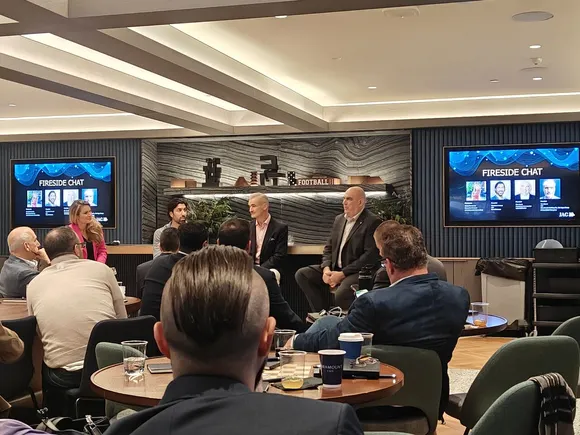
John Alexander Consulting (JAC) has introduced a partner program that lets technology advisory firms (TAs) use its technology expense management (TEM) software, client engagement process, and back office services. The elite tier will onboard a few independent TAs under 'Powered by JAC' branding, sharing commissions with JAC. JAC aims to widen its customer base and help TAs scale without building their own TEM platforms. The program is led by Steve Braverman, hired as director of sales in August, who will recruit and support partners. JAC's TEM software has helped it win enterprise clients against larger competitors, and the company sees partnerships as a faster route to market.
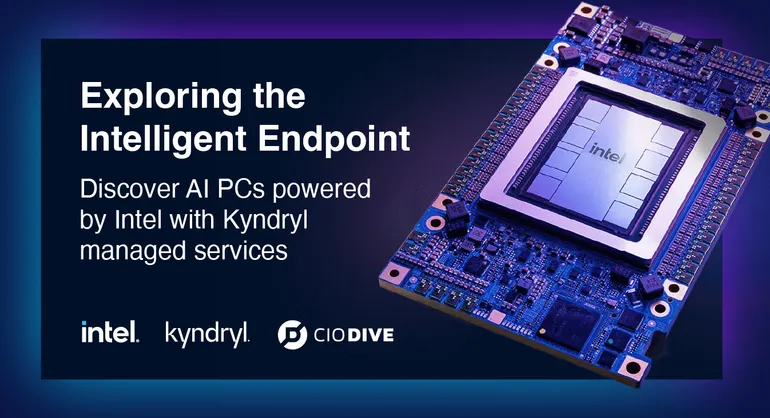
In this three-podcast series, Intel and Kyndryl explore how AI-enabled PCs use dedicated NPU, GPU, and CPU components to run AI locally for speed and privacy. The series shows senior tech executives how Kyndryl secures and manages Dell Pro AI PCs powered by Intel Core Ultra Processors with vPro and AMT, using real-world examples to demonstrate how that protects businesses and keeps them running smoothly during disasters. It also covers how Kyndryl uses modern Dell Pro AI PC capabilities to combine device health, application performance, and employee experience into a single connected view, and how small language models run directly on the AI PC to help the endpoint manage itself and improve the employee's working day. Episode one discusses how the Blue Friday outage revealed that Intel AMT had shipped in business PCs for nearly 20 years but few IT teams had turned it on due to the time-consuming activation process, and how vPro deployment has collapsed from a 26-step provisioning into a six-step cloud service.

Avant Communications launched an initiative at its Special Forces Summit to pair technology advisors with vetted professional services firms, initially for Zoom product implementations before expanding to its customer experience portfolio and other technologies. The program aims to remove friction and speed deals, with professional services partners operating as suppliers and paying advisors commissions. This addresses long-standing trust issues between advisors and service firms.

Anthropic and AWS are ramping up efforts to train forward deployed engineers (FDEs) to meet growing demand for AI deployment expertise. Anthropic introduced the Claude Frontier Academy, backed by $100 million, aiming to train 10,000 FDEs by the end of next year, with participants from consulting firms like Accenture, Bain, Capgemini, Deloitte, and McKinsey, as well as Morgan Stanley and Novo Nordisk. AWS announced two technical credentials and three free training pathways for FDEs, following its $1 billion investment in an engineering unit. The FDE model is being adopted across the industry, with Google Cloud, Microsoft, and OpenAI also launching similar initiatives. Gartner estimates only about 2,000 engineers currently qualify as FDEs, while the industry could absorb four times that number.

The California Department of Tax and Fee Administration is finalizing enforcement plans for a sales tax on software-as-a-service products, effective Jan. 1, 2027, following the enactment of Senate Bill 122. The law imposes a state tax on prewritten software, including cloud-based offerings, while exempting custom software and digital infrastructure. Value-added resellers and distributors face at least a 7.25% tax on software sold to end customers, but clarity is lacking on key issues such as resale treatment, optional maintenance agreements, and bundled offerings. Industry groups including the Computer and Communications Industry Association and Salesforce have raised concerns, while some executives downplay the impact as a minor annoyance.