


Security

The spread of sensitive data to non-production environments is not a new phenomenon, but DevOps, analytics, and AI training pipelines are dramatically expanding its scale and exposure. According to the Perforce Delphix report, 60% of enterprises experienced data breaches in non-production environments last year, and 84% still allow compliance exceptions. This article explores the causes of the risk and closed-loop governance solutions.

OpenAI released a frontier governance framework on Thursday, responding to emerging regulatory requirements such as California's Frontier AI Transparency Act and the EU AI Act's general-purpose AI code of practice. The document details the company's safety practices in areas such as cyberattack assessments, risk management, and incident response, and commits to continuous updates in line with national and international AI risk management standards.

Cisco researchers reported on Wednesday that major AI developers' safety claims are based on incorrect assumptions about hacker behavior. Tests on 15 frontier models showed that multi-turn malicious prompt attack success rates ranged from 8% to 88%, while single-turn attacks ranged from only 2% to 65%. The study also found that vendors that publicly emphasize model capabilities showed a larger vulnerability gap under multi-turn attacks.

An Okta survey released Wednesday shows that despite most executives' confidence in employees' responsible use of AI, shadow AI is quietly infiltrating enterprises. More than half of employees admit to using personal AI tools without approval and allowing them access to internal messages, HR information, and confidential files. 58% of executives reported AI-related security incidents or near misses in the past year. Experts recommend that companies adopt a collaborative approach and provide compliant alternatives.

Gartner's latest report shows that adopting a uniform governance strategy for enterprise AI agents will significantly increase project failure rates. The firm predicts that by 2027, 40% of enterprises will discontinue some agents due to technical teams failing to distinguish between agents' action capabilities and authorization scope. Analysts recommend a four-level proportional governance model—observe, advise, act after approval, and act autonomously—to balance efficiency and risk.

Palo Alto Networks Chief Product and Technology Officer Lee Klarich revealed in a blog post that the company, as a launch partner for Anthropic's Project Glasswing, tested frontier AI models such as Claude Mythos starting April 7, resulting in the disclosure of 26 CVEs in the first Patch Wednesday security advisory, far exceeding the usual 5. Klarich emphasized that merely running the models does not automatically solve problems; it requires building an AI scanning framework and adopting a multimodal approach. Meanwhile, Google and Microsoft also reported breakthrough progress in AI-driven vulnerability discovery.

According to Sophos's 2026 State of Identity Security report released on Tuesday, 70% of enterprises experienced at least one identity-related breach over the past year, with an average of three such incidents per company. Two-thirds of ransomware victims originated from identity issues, with an average recovery cost of $1.64 million. Based on a survey of 5,000 IT and cybersecurity leaders across 17 countries, the report indicates that identity has become the 'new perimeter' of cybersecurity, yet most enterprises still show significant gaps in monitoring and credential management.
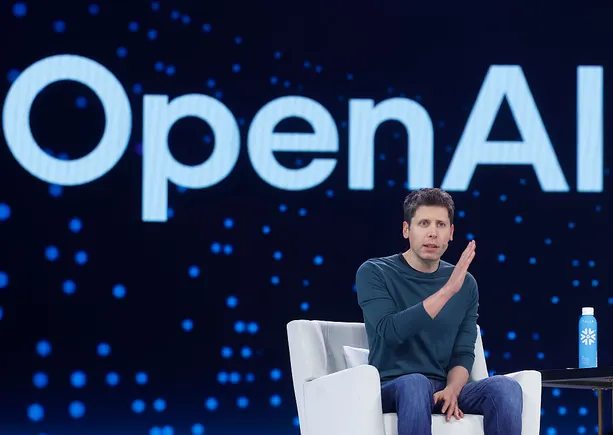
OpenAI Releases Daybreak Cybersecurity Initiative, Directly Responding to Anthropic Mythos Challenge
OpenAI introduces the Daybreak cybersecurity initiative, aiming to help enterprises build autonomous defense capabilities from the ground up through AI reasoning and agent technology. The product is positioned against Anthropic's Mythos and has attracted partners such as Cloudflare and Cisco. Analysts suggest that enterprise technology leaders should actively evaluate the potential of such AI security tools.
Google Threat Intelligence Group (GTIG) released a report on Monday disclosing that a threat actor used AI to develop a usable zero-day vulnerability, believed to be the first successful case. The attack attempted to launch a large-scale exploitation event but was detected and prevented by Google in advance. GTIG has notified relevant developers and released a patch. The report also noted that hacker groups linked to North Korea and China have shown strong interest in AI-assisted vulnerability discovery.

A report released by security firm BlackFog on Wednesday indicated that the vast majority of global ransomware attacks in the first quarter of 2026 were not disclosed. Data shows that undisclosed attacks reached 2,160, nearly 10 times the 264 disclosed attacks. The United States was the main target, with manufacturing and healthcare being the most frequently attacked industries in undisclosed and disclosed attacks, respectively. The report also highlighted emerging attack tools and new risks brought by shadow AI.