

Channel Leaders
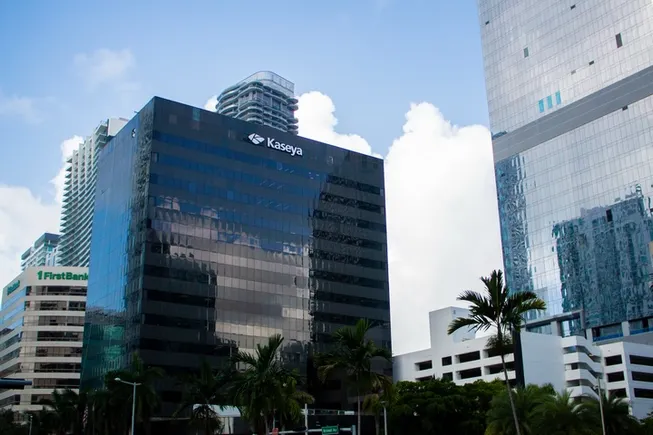
Kaseya announced on Tuesday the launch of an agentic IT management and security platform, trained on over 1 billion service desk tickets, 3 exabytes of backup data, and 17 million managed endpoints. It can autonomously perform ticket triage, threat containment, backup verification, and service desk optimization. The platform is now available to Datto Autotask Ultimate subscribers and is embedded in Kaseya's hybrid cloud cyber resilience portal and SIEM solution. This launch comes less than a year after new CEO Rania Succar took office, and the company recently opened a Silicon Valley R&D center to accelerate AI innovation.

The traditional product-driven model for channels is facing bottlenecks. As AI amplifies complexity, enterprise customers are no longer satisfied with purchasing more tools but need a single responsible partner that can integrate data, govern workflows, ensure security, and scale AI operations. IDC predicts global public cloud spending will exceed $1 trillion by 2026, while data from McKinsey and IBM shows most enterprises are still in the AI experimentation phase, with a clear execution gap. Omdia expects the enterprise agentic AI software market to surge from $1.5 billion in 2025 to $41.8 billion by 2030. The future of channels lies in providing 'outcome-oriented' solutions rather than mere product stacking.

The complexity of channel marketing has long troubled brands and partners. At the Channel Marketing Association annual summit, Structured CEO Stacey Epstein, ServiceNow Global Partner Marketing Director Maisa Fernandez, and Microsoft Global Partner Marketing General Manager Colleen Tyler agreed that AI can significantly reduce process friction, but security risks and human trust cannot be overlooked.

In preparation for the May 1 launch of Microsoft 365 E7 and Microsoft Agent 365, Microsoft is adjusting its partner ecosystem, adding new specialty certifications, and updating distributor standards to help partners better sell AI and agent-based bundled solutions.
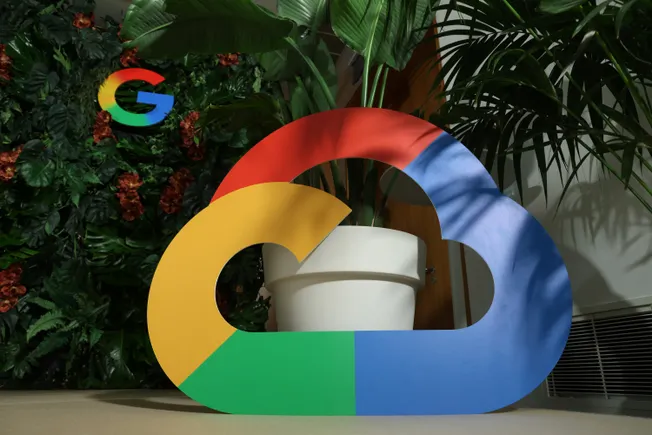
On Wednesday at the Google Cloud Next 2026 conference in Las Vegas, Google Cloud announced a $750 million investment for AI training and deployment across its 120,000-member partner ecosystem. The funds will be used to incentivize and support global consulting firms, system integrators, software developers, and channel partners, and to help some companies build practices around the Gemini Enterprise agentic AI platform.

Facing increasingly diverse technical needs from clients, more technical advisors (TAs) are choosing to form partner networks, serving clients together by sharing opportunities and complementing expertise, rather than relying solely on internal expansion or equity acquisitions. This collaborative model is accelerating with the support of commission-sharing mechanisms from distributors (TSDs) and third-party industry organizations.
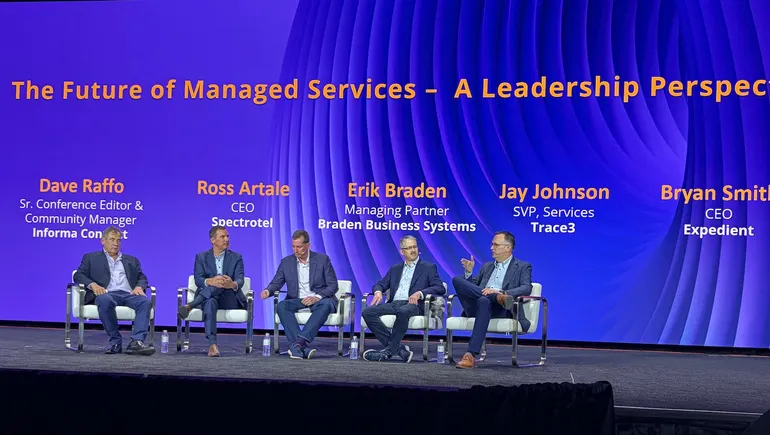
At the annual Channel Partners Conference & Expo in Las Vegas last week, AI anecdotes were everywhere. Behind narratives of coding heroism, productivity breakthroughs, and recurring revenue streams, partners are struggling with persistent IT readiness gaps that undermine adoption efforts. Expedient CEO Bryan Smith summarized this challenge as a 'trilemma': 80% of companies need to redo hardware and infrastructure, 70% seek to cut hyperscaler cloud spending, and nearly 100% are reassessing virtualization strategies.
Wipro will acquire certain customer contracts of California-based Alpha Net Group for $70.8 million, aiming to expand its AI business. The transaction is expected to close on June 30, and the contracts involved have contributed nearly $100 million in revenue over the past three years.

Kaseya's latest 2026 MSP industry report indicates that managed service providers (MSPs) are facing multiple pressures, including difficulties in customer acquisition, shrinking contract sizes, and talent shortages. Nearly three-quarters of respondents believe winning new customers is the biggest obstacle, while AI and automation have surpassed security and backup to become the most demanded services by customers. The report emphasizes that in a mature market, success depends on simplifying technology stacks, intelligent automation, and converting high-demand needs into profitable service models.
Salesforce on Tuesday launched its integrated AgentExchange marketplace, merging AppExchange and Slack marketplace with the AI agent marketplace, and announced a $50 million investment for partner incentives and technical support. This move aims to drive enterprise adoption of AI agents and address investor concerns about the software industry's outlook.