


Latest news

Albertsons announced on Friday the expansion of its board of directors, appointing Brian Rice, who has over 30 years of technology leadership experience, as a new director. Rice currently serves as Executive Vice President and Global Chief Information Officer at McDonald's, and his addition underscores Albertsons' commitment to advancing AI initiatives at scale.
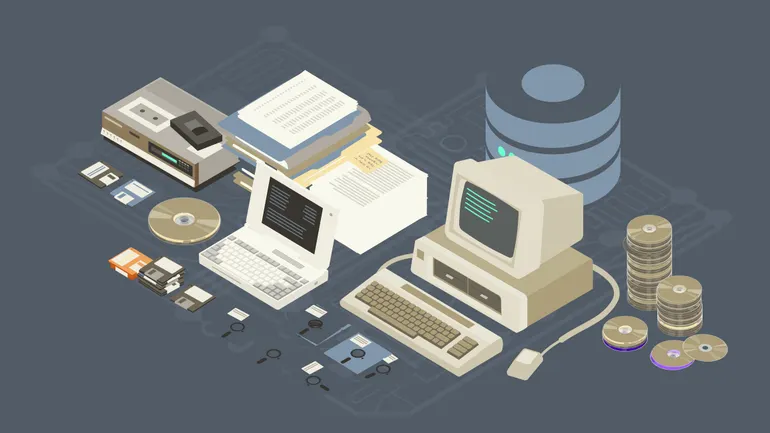
The IT asset disposal (ITAD) industry is undergoing a transformation from one-time transactions to recurring service models, and private equity firms view it as an integration opportunity similar to the MSP market in 2018-2019. Industry leaders are attracting capital attention through service-oriented transformation, while the rapid iteration cycles of global tech giants and increasingly stringent environmental regulations further drive this change.

Microsoft is collaborating with multiple security vendors to advance the Windows Resiliency Initiative, which aims to refactor how third-party security software operates within the Windows kernel to reduce the risk of global IT outages similar to the CrowdStrike incident in 2024. The project is still in its early stages, involving API redesign, feature migration, and performance trade-offs, and is expected to take several years.

Unilever confirmed via email on Friday that Reema Jain will serve as the company's new CIO, succeeding Sam Kini, who stepped down from the role in January. Jain joined the company in May 2025 and previously worked there from 2016 to 2021. She will be responsible for core technology foundations, including enterprise architecture and digital infrastructure.
Driven by AI demand, Nvidia's fourth-quarter revenue reached $68 billion, up 73% year-over-year, with full-year revenue hitting a record $215 billion, up 65% year-over-year. Data center business grew by $11 billion quarter-over-quarter, and CFO Colette Kress stated that demand comes from cloud service providers, hyperscalers, AI model developers, enterprises, and sovereign nations. The company expects supply constraints to persist through fiscal 2027 but remains confident.

A report released by VulnCheck on Wednesday indicates that over the past year, although less than 1% of software vulnerabilities were exploited in the wild, the speed and scale of their weaponization hit new highs. Researchers tracked over 14,400 exploits related to approximately 10,500 unique CVEs, a year-over-year increase of 16.5%, with a significant portion of the growth linked to AI-generated PoC code. The report emphasizes that defense teams face greater difficulties in prioritization, and that over 50% of ransomware-related vulnerabilities stem from zero-day flaws.

Torii's 2026 SaaS Benchmark Report indicates that enterprise application proliferation is undermining governance efforts, with the average large enterprise running 2,191 applications, over 61% of which are not IT-approved. AI intensifies IT sprawl, as employees use an average of 40 applications, with only 15% fully controlled, leading to waste and security risks. Torii executives call for governance models to shift toward continuous discovery.

This article is a guest post by Francis Brero, VP of AI Strategy at HG Insights. It notes that despite reports of 95% of AI initiatives failing, the experiment failure rate is not the key metric—speed is. Chief AI Officers (CAIOs) need to educate the executive team, treat learnable experiments as successes, and drive talent management changes to increase talent density, enabling AI agents to deliver value beyond human capabilities. Additionally, they must address security risks (such as data breaches and model context protocol attacks) and the 'workslop' problem (low-quality AI-generated content), collaborating with CISOs to balance speed and risk. The CAIO's role is critical to whether an enterprise can survive the AI transformation.
A CloudBolt Software survey of 302 North American IT decision-makers reveals that 86% of organizations are actively reducing their VMware deployments, but only 4% have completed a full migration. Most enterprises adopt a phased, partial migration strategy to address cost increases and product portfolio changes following the Broadcom acquisition.

With rising cybersecurity threats and return on investment taking center stage, enterprise AI adoption is placing immense pressure on CIOs. Technology leaders need to guide their companies through transformation, including deploying employee tools and customer interaction features. CEOs expect rapid returns, while new concepts such as AI bills of materials continue to emerge. CIO Dive has compiled a series of reports to help technology executives navigate the wave of change, focusing on operational improvements.