


Latest news

According to a report released Tuesday by Information Services Group, U.S. companies are incorporating cyber risk issues into overall enterprise risk strategies, with AI adoption and business resilience driving significant shifts in business priorities. Cybersecurity is increasingly seen as a critical business issue, with companies accelerating the adoption of agentic AI and transitioning to hybrid or multi-cloud environments. Corporate leadership is closely integrating cyber spending decisions with overall IT strategy, with C-suite executives and board members taking on greater responsibility for business continuity, financial risk, and compliance.

Lumen Technologies conducted layoffs within its commercial organization in early July, including approximately 90 people in the global partner solutions team, stating that the move is to align the workforce with business needs and strategic focus, while shifting business emphasis from voice to network-as-a-service and the Alkira product portfolio.

Security researchers have been tracking attack campaigns targeting Cisco SD-WAN vulnerabilities since early 2026. These attacks have impacted critical government websites and key infrastructure providers, causing anxiety among global authorities. Attackers exploited multiple vulnerabilities (such as CVE-2026-20127, CVE-2026-20182, etc.) to compromise systems, employing techniques including unauthorized peer connections and web shell deployment. Cisco products are widely deployed in government and enterprise networks, making them high-value targets. Cisco has taken response measures including introducing AI-based vulnerability scanning and adjusting disclosure policies.

Anthropic shifted to selling enterprise-level AI tools two years ago and launched the Claude Partner Network in early March. As an early partner, Caylent has built a team of over 700 Claude product engineers and is accelerating market expansion with Anthropic's $100 million partner fund. Industry observers note the increasingly critical role of partners in the enterprise market.

KPMG's Q2 2026 Global AI Pulse Survey shows that 71% of enterprises report good progress in achieving full integration of AI and human workforce, up from 60% at the start of the year. Nearly a quarter of enterprises have embedded AI into daily processes, up from 13% in the first quarter. Despite cost pressures, enterprise confidence in AI value realization has significantly strengthened, but executive accountability for AI outcomes remains a key factor driving performance gaps.

The success of enterprise AI transformation depends not only on technology but also on the AI literacy of the workforce. A World Economic Forum report shows that by 2030, 39% of core skills will change, and nearly 60% of the global workforce will need retraining. However, current AI education models face issues such as a gap between theory and practice and a lack of personalization. This article proposes an immersive, hands-on learning framework, emphasizing changes in work methods as the measure of success, to help enterprises build an adaptive workforce.
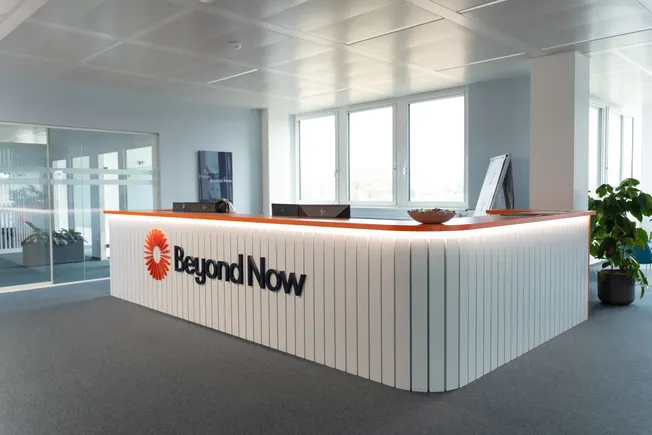
Telecom operators often underestimate the critical role of managed service providers (MSPs) in SME technology decisions when building AI-driven digital marketplaces and partner ecosystems. Beyond Now CEO Angus Ward points out that operators need to shift from a "sales channel" mindset to a "strategic partner" mindset, valuing the "last mile" value of MSPs in solution integration and customer trust.

In a report released last week, Gartner stated that agentic AI is reshaping the enterprise application software market, expected to impact up to $234 billion in spending by 2030. As AI agents complete tasks across systems, users' reliance on traditional software interfaces decreases, accelerating the shift of SaaS pricing models from subscriptions to outcome-based approaches. The report warns that traditional vendors failing to adapt to this transition may face survival crises, while those embracing agentic capabilities will gain new revenue opportunities.

Microsoft announced a global workforce reduction of 2.1% on Monday, affecting nearly 5,000 positions, of which about 3,200 come from the Xbox division. At the same time, the company is actively recruiting AI talent and launching the $2.5 billion Frontier Company initiative to enhance customer AI implementation capabilities.

CompTIA's latest analysis shows strong employment growth in the U.S. IT industry in June, with the unemployment rate dropping to 2.9%, the first time below 3% this year. Tech job postings exceeded 600,000 for the second consecutive month, but layoffs in the tech sector continue, with AI emerging as a key force reshaping the industry.