


Latest news

Last month, Accenture established an independent business unit, Accenture Edge, focused on the mid-market. Through a series of acquisitions to integrate resources, it targets an opportunity of approximately $240 billion and leverages AI and platform-based services to enter this customer segment that was previously difficult to cover.

The Trump administration announced on Tuesday the launch of the Gold Eagle project, aimed at coordinating the use of cutting-edge AI models in vulnerability discovery and remediation to address the surge in vulnerabilities caused by AI and pressure on the security community. The project, in collaboration with Carnegie Mellon University and based on the VINCE platform, focuses on open-source software but faces challenges such as overlap with existing private sector initiatives and the expiration of CISA's authorization.

A survey of 2,600 executives across 13 countries by SAP and Oxford Economics found that satisfaction with AI investment returns has risen to 69%, but cost efficiency is not the primary benefit; the proportion of tasks assisted by AI has increased from 25% to 30%, expected to reach 48% in two years; U.S. companies spend an average of $37.2 million on AI and see returns of $9.9 million, with returns expected to grow to $26.5 million in two years.

In a report released on June 30, Federal Reserve Bank of St. Louis researchers William Rodgers III and Alice Kassens noted that employment opportunities for young adults aged 18 to 24 have continued to deteriorate due to a reduction in overall job openings and an increased demand for AI-related skills. Between April 2023 and December 2025, the employment rate for this age group fell by more than two percentage points, primarily reflected in a rise in unemployment rather than a withdrawal from the labor force. In contrast, employment outcomes for workers aged 25 to 64 have remained largely stable.
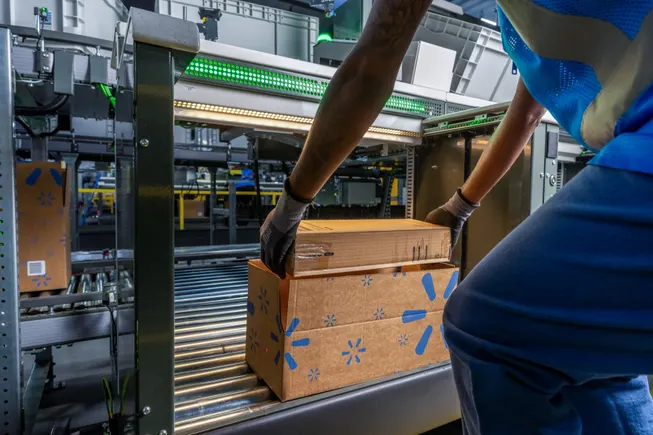
Before Walmart pushed AI to its 2 million employees, its supply chain team already relied on predictive models. Now, leveraging massive data, machine learning, large language models, and digital twin technology, Walmart is optimizing every step from receiving to delivery to balance assortment, speed, and cost, while quickly responding to sudden disruptions.

Texas Capital announced the appointment of Mo Jamous as Managing Director, Chief Digital and Information Officer, effective immediately. Jamous will be responsible for the company's technology strategy and AI initiatives, reporting directly to Chairman, President and CEO Rob Holmes. He previously spent five years at U.S. Bank, serving as CIO for Consumer and Commercial Banking, and most recently held the role of SVP and CTO for Banking Platforms at FIS.

Microsoft announced in a partner update on Friday that it is shifting Azure IP co-sell to a cloud marketplace-first model. Over the next year, eligible independent software vendors (ISVs) will transition from self-reporting Azure infrastructure usage to selling SaaS solutions directly through Microsoft Marketplace. The previous Partner Reported Azure Consumed Revenue co-sell model will be phased out within this fiscal year, which begins on July 1. Analysts view this as a clear signal from Microsoft to ISVs that Marketplace has become the primary channel for ISV sales on the Azure platform.

BitTitan announced new Microsoft Teams private chat capabilities on its workspace data migration platform and is pushing partners to convert migration projects into recurring revenue. The company also adjusted its executive team, with Aaron Wadsworth moving to Senior Director of Product and Strategic Partner Management, and Ajay Khatri taking over as General Manager.

Gartner's latest research predicts that by 2029, 60% of organizations will adopt smaller software engineering teams, a significant increase from 15% this year. AI agents taking on more routine technical tasks will drive engineering departments to reorganize into agile groups of 4-5 people, but this model is not aimed at cost reduction, but rather to better combine AI with human expertise.

Recently, a threat actor claiming to be "888" stated that they breached Accenture's systems in early July, stealing approximately 35GB of data, involving source code, Azure personal access tokens, RSA encryption keys, and SSH keys. An Accenture spokesperson stated that the issue has been fixed, but analysis by security firm SOCRadar indicates that the leaked source code and keys may expose Accenture and its clients to further attacks. This incident is not isolated, as Accenture previously suffered a LockBit ransomware attack and data exposure due to AWS misconfiguration.