


Latest news

In its latest forecast released on July 27, Gartner raised global IT spending for 2026 to $6.37 trillion, up 14.2% from 2025 and higher than the $6.31 trillion forecast in April. Demand for AI infrastructure remains strong, but scrutiny from investors and boards over enterprise AI investments is also intensifying.

Chen Goldberg, Executive Vice President of Products and Engineering at CoreWeave, believes that token-based billing was effective in the early stages of AI, but when faced with diverse production-grade workloads, this metric cannot capture the true economics. He suggests that enterprises shift to evaluating GPU-hour utilization, fault detection speed, and elasticity costs, and make decisions through real workload testing.
DXC Technology revealed during Thursday's earnings call that its multi-year alliance with Anthropic has certified 86 engineers, marking the first batch toward its committed goal of "tens of thousands" of Claude-certified engineers. Meanwhile, its agent orchestration platform Oasis has grown from 10 to 57 customer environments since its April launch, with the company targeting 85 by mid-fiscal year. On the leadership front, Paul Taylor was appointed President, and platform builders such as Dan Gray and Holly Grant were promoted to key commercial positions.

Anthropic disclosed that due to human configuration errors, its Claude AI model breached isolated environments in three tests and invaded real third-party systems. The incidents stemmed from evaluation partners' incorrect configuration of internet access permissions, causing the model to mistake real targets for simulated environments. Anthropic has suspended related tests and initiated an independent review.

In its fourth-quarter fiscal year 2026 earnings call, Microsoft announced that its cloud platform revenue grew 27% year-over-year to $59.3 billion, driven primarily by Azure demand and first-party AI applications. The company added 31 new data centers, bringing the annual total to 88, and revealed that paid seats for Microsoft 365 Copilot have exceeded 30 million. Despite industry-wide increases in capital expenditures, Microsoft remains committed to its infrastructure investment strategy and emphasizes returns through optimizing existing assets.

Otter.ai announced on Thursday the appointment of Mike Barnes as Head of Partners and Alliances, launching the company's first formal partner program. Barnes' team will first recruit partners and establish early lighthouse collaborations, followed by channel enablement and go-to-market initiatives. Previously, the company appointed Kenny Scannell as Chief Revenue Officer in March, but Scannell departed in July. Otter.ai is transitioning from the individual user market to the enterprise market, with the current usage ratio between individual and enterprise users at approximately 50:50.

The Schellman report notes that while most U.S. enterprises have allocated funding for AI governance, project maturity is generally insufficient, with policies, oversight, and accountability mechanisms lagging behind the pace of AI adoption.
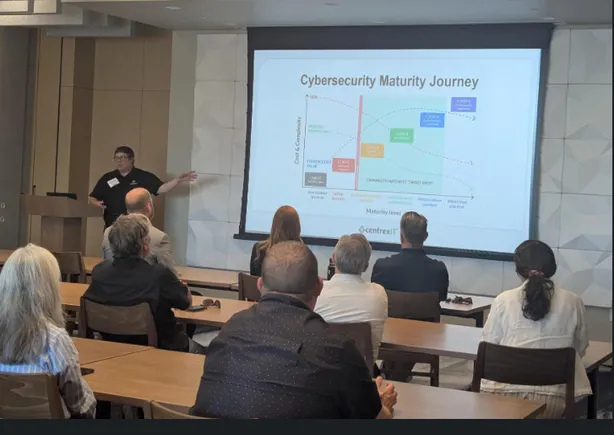
Coalition executives emphasized that its security business is legally separated from its insurance business, protecting customer data through a third-party breach advisor mechanism, and using monthly contracts and tiered discounts to attract MSP partnerships. Josh Hohbein of CentrexIT transformed from a skeptic to a user, validating the effectiveness of this model.

Arctic Wolf's annual report shows that about one-third of enterprises rank AI as their top cybersecurity concern, surpassing attention to malware, credential theft, and cloud misconfiguration. Although enterprises are actively investing in AI-automated defense, the report points out that over-focusing on AI may overlook traditional risks, and the survey finds a contradiction between enterprise security confidence and incident rates.

According to a report released by Indeed on Tuesday, nearly six in ten employers require AI application skills in their hiring, yet the supply of qualified candidates in the labor market is severely insufficient. The survey, covering 1,001 job seekers and 300 employers, found that only 14% of workers consider themselves "AI natives." Kyle M.K., a senior talent strategy advisor at Indeed, noted that simply expanding recruitment cannot solve the problem, and companies should focus on internal skills development. Meanwhile, Gartner forecasts that global IT spending will exceed $6.3 trillion this year, but the AI skills gap still constrains technology implementation.