


Leadership

A Kyndryl survey shows that only one in four business and technology leaders fully trust their AI systems, but more than four in five respondents expect autonomous AI agents to make decisions with substantial business impact within the next year. AI is now widely embedded in core processes, and enterprises are adapting by redesigning roles and upskilling.

A survey of over 850 global C-level executives by Protiviti and the University of Oxford found that technology leaders such as CIOs have a net confidence of 61% in AI-driven revenue growth, while CEOs and board members have only about 30%. Alignment among leadership on AI success criteria influences confidence more than technological maturity.

A survey by Publicis Sapient of 1,550 enterprise technology decision-makers shows that over 70% of U.S. respondents expect AI to expand significantly in the next one to two years, but only 20% believe their organizations are prepared. Nearly a quarter of respondents cited operating models as a primary obstacle, and most enterprises have not thoroughly reformed systems, workflows, and operating models to fully leverage AI.
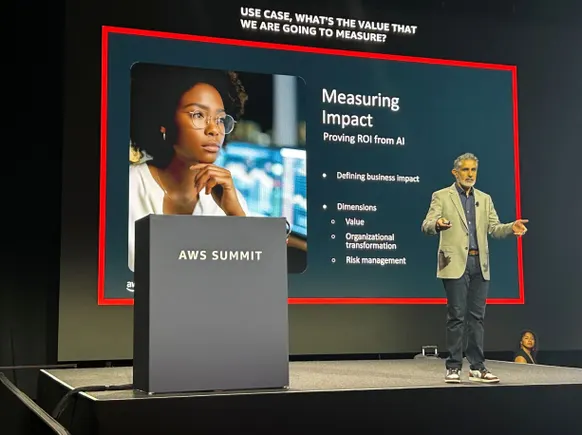
Enterprises are undergoing agentic AI transformation, but pilot failure rates remain high. Boomi's Senior Vice President of Products, Mani Gill, and AI Field CTO, Patricia Bradby Moore, pointed out at the AWS Summit in New York that the key to success lies in building trust, measuring impact, showcasing results, and maintaining governance. They recommend starting with low-risk use cases and scaling gradually, emphasizing the importance of data foundations, ROI definition, and human oversight.

Stitch Fix announced the appointment of Sree Sreedhararaj as Chief Product and Technology Officer (CPTO), succeeding Tony Bacos, who is retiring. Sreedhararaj brings over 20 years of retail technology experience, having previously worked at Walmart Labs, Sephora, and Ipsy. This appointment highlights the trend of integrating technology and product as the company advances its transformation strategy.

The second annual Insurance AI Index report by industry research firm Evident Insights shows that insurers have greater confidence in AI applications, with talent recruitment becoming key. As projects transition from large-scale data pipeline construction to AI integration and optimization across individual business lines, insurers are increasingly favoring external hiring over internal development. The report notes that claims management, underwriting, pricing, and customer interaction are the primary use cases, but the real strategic test lies in whether AI can help insurers optimize risk selection, precise pricing, and capital allocation.

The latest CIO 2026 Outlook report from technology talent services company Experis reveals that the focus of the CIO role has shifted from cybersecurity in 2025 to aligning IT strategy with business goals. Regarding returns on AI investment, over half of respondents report positive returns, but nearly one-third believe companies are over-investing. The report also notes that CIOs face dual pressures from talent shortages and the pace of change.

A survey of 6,000 digital workers by Glean's Work AI Institute found that three-quarters of knowledge workers believe AI boosts personal productivity, but only 13% say technology has significantly improved company performance. Automation saves an average of about 11 hours per week, but employees spend slightly more than half of that interaction time managing tools rather than producing output. The report notes that successful enterprise AI adoption relies on a 'human infrastructure' built around AI, including context implementation, use-case training, shadow AI signal identification, and governance mechanisms.