


Leadership

Several retail executives stated in recent earnings calls that they will accelerate AI applications in the second half of 2026, covering supply chain, customer service, product discovery, and internal processes. Ulta Beauty appointed a new CTO to advance its technology strategy, Gap expects capital expenditures to reach $650 million, and Dollar General's net sales increased 5.2% year-over-year to $11.3 billion. Industry experts noted that AI investments will make shopping experiences more personalized, but consumers may not notice the technology behind the scenes.

Infosys' latest report shows that corporate enthusiasm for AI investment remains strong, but 72% of respondents have successfully scaled fewer than a quarter of pilots, and two-thirds of enterprises struggle to measure AI ROI. Experts point out that team coordination and business-oriented definitions of success are key.

Target Corporation announced on Tuesday that it has appointed Chandhu Nair as its first chief AI officer and senior vice president, effective August 24. Nair spent more than six years at Lowe's, most recently serving as senior vice president of stores, data, AI, and innovation. At the same time, Purvi Shah has been promoted to senior vice president of user experience. Both report to Chief Information and Product Officer Prat Vemana.
According to the latest Gartner report, global spending on AI-optimized infrastructure as a service (IaaS) is projected to grow 96% to $42 billion in 2026, with inference spending ($23.3 billion) exceeding model training spending ($19 billion) for the first time. This shift indicates that enterprise AI deployment is moving from the experimental phase to production at scale, with inference workloads becoming mainstream.

Consulting firm West Monroe released a report in July recommending that enterprises treat AI as a new operational layer, restructure workflows, and link AI to business KPIs. Based on a survey of over 400 U.S. business leaders, the report notes that executives face challenges such as a lack of trust, rapid model iteration, regulatory risks, and capacity constraints when reshaping operations. Report author Erik Brown emphasizes that IT leaders should avoid platform lock-in and maintain flexibility in data and infrastructure.
Meta released its terminal programming agent Muse Code (beta) on Wednesday, aiming to improve software engineering task efficiency, and simultaneously upgraded its foundational model Muse Spark. This move is Meta's latest effort in the enterprise AI space, as the company seeks to monetize AI through increased infrastructure investment. Executives raised the full-year capital expenditure forecast to $130 billion during the earnings call and are considering renting out data center computing power.
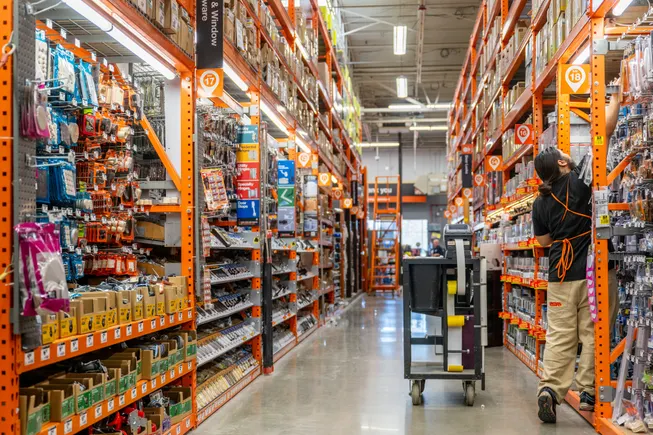
Home Depot announced last week a reorganization of its technology team to align with the company's ongoing overall organizational changes, aiming to accelerate innovation and capture more market share. The adjustment consolidates the store, supply chain, and Pro product technology teams under the leadership of Franziska Bell, who joined the company in March as EVP and Chief Technology Officer. Home Depot has established three strategic customer experience pillars for this reorganization, focusing on streamlining core products, improving the connected shopping experience, and expanding the professional home improvement business.

Accenture's "Pulse of Change" report shows that agentic AI exceeds expectations in improving productivity and employee satisfaction, but only 23% of companies report quantifiable business value, down from 32% earlier this year. Experts suggest companies should focus on deep application rather than broad deployment.

According to a report released by Indeed on Tuesday, nearly six in ten employers require AI application skills in their hiring, yet the supply of qualified candidates in the labor market is severely insufficient. The survey, covering 1,001 job seekers and 300 employers, found that only 14% of workers consider themselves "AI natives." Kyle M.K., a senior talent strategy advisor at Indeed, noted that simply expanding recruitment cannot solve the problem, and companies should focus on internal skills development. Meanwhile, Gartner forecasts that global IT spending will exceed $6.3 trillion this year, but the AI skills gap still constrains technology implementation.

A global survey by TeamViewer and Sapio Research reveals that employees have lower comfort and confidence in AI than managers, with 61% of respondents wanting AI to have no independent action capabilities. Although most people use AI daily, the trust deficit limits its application scope. CEO Oliver Steil emphasizes that enterprises should pursue trustworthy autonomy rather than full automation and need to establish governance frameworks.