


Deep Dive
来自我们记者的行业洞察

U.S. critical infrastructure operators, due to declining confidence in federal government support capabilities, established the Critical Infrastructure Alliance (ACI) in February, with founding members including JPMorgan Chase, Mastercard, AT&T, and Berkshire Hathaway Energy. The alliance aims to promote cross-industry cybersecurity collaboration and fill the coordination vacuum caused by government budget cuts and staff attrition. ACI Chairman Ben Flatgard stated that the private sector must take on more responsibility. Experts believe that while this move cannot replace federal leadership, it helps address visibility gaps in critical systems.
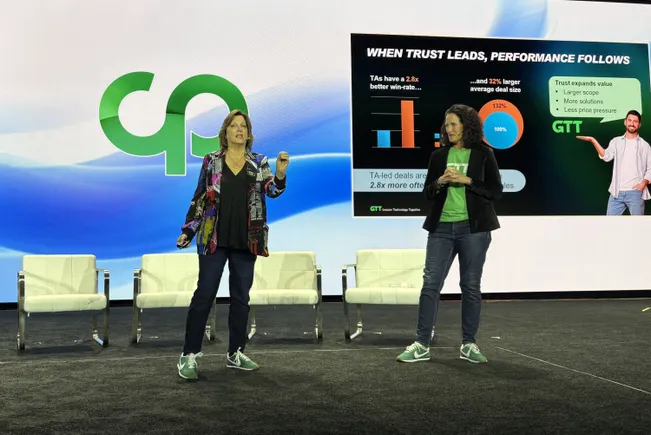
A study by JSG Channel Consulting found that the technology advisor model has 25% lower customer acquisition costs for enterprise clients compared to direct sales, with longer client retention and lower churn rates. However, most CFOs still consider this channel more costly based on one-sided calculations. Industry leaders urge finance teams to comprehensively assess channel value.

As the telecom and AI markets become increasingly complex, traditional distributor models face challenges. Companies such as World Wide Technology and Technologent are establishing agent businesses, partnering with technical service distributors on a commission basis to serve customers more flexibly and expand their market reach.

At the RSA Conference 2026 held last week, mainstream cybersecurity vendors launched a dense array of new products, but channel partners responded coolly. Affected by tool proliferation, rising costs, and reduced vendor support, some MSPs and MSSPs are reassessing their vendor portfolios, and some are even attempting to use AI coding tools to develop their own MDR, EDR, and XDR capabilities. Meanwhile, the boundary between MSPs and MSSPs is increasingly blurred due to changing customer demands.

Professional Services Automation (PSA) platforms aim to shift the center of gravity of AI development in the MSP industry toward themselves. MSPs are facing the choice of building in-house, trying startup SaaS, or relying on existing PSA platforms. With pressure and risks coexisting, the decision is imminent.
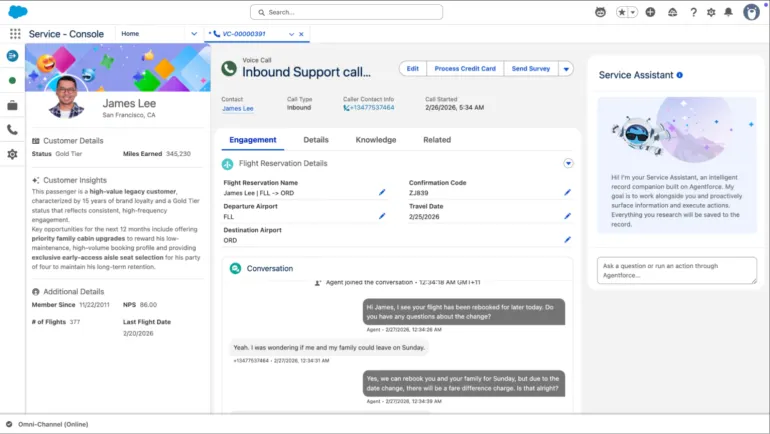
Salesforce released Agentforce Contact Center on March 10, 2026, claiming it is the only unified platform that natively integrates contact center, CRM, and virtual AI agents. Analysts view this move as a strategic shift by Salesforce from an integration-first approach to native in-house development, while also triggering competitive responses from CCaaS partners such as Genesys, RingCentral, Vonage, and NiCE.

Microsoft is collaborating with multiple security vendors to advance the Windows Resiliency Initiative, planning to migrate security software from kernel mode to user mode to enhance system resilience. The project originated from the CrowdStrike update incident in 2024 and is still in its early stages, facing technical challenges and market pressure, and is expected to proceed over the long term.

Private equity investors are learning from the insurance brokerage industry to drive consolidation in the tech advisory (TA) sector. Insurance brokerage and TA are highly similar in asset-light models and recurring commission income, but the insurance market is decades ahead in maturity. Investors need to be patient while also noting differences in product stability, channel roles, and client management between the two.

Microsoft is collaborating with multiple security vendors to advance the Windows Resiliency Initiative, which aims to refactor how third-party security software operates within the Windows kernel to reduce the risk of global IT outages similar to the CrowdStrike incident in 2024. The project is still in its early stages, involving API redesign, feature migration, and performance trade-offs, and is expected to take several years.
Hybrid cloud strategies continued to gain popularity in 2025, driving increased interest in specialized AI clouds or neocloud providers. According to a Synergy Research Group report, neocloud revenue in Q2 2025 grew 205% year-over-year, with the full year expected to exceed $23 billion. Facing intense competition in 2026, neocloud providers need to deepen their focus on the enterprise buyer market.